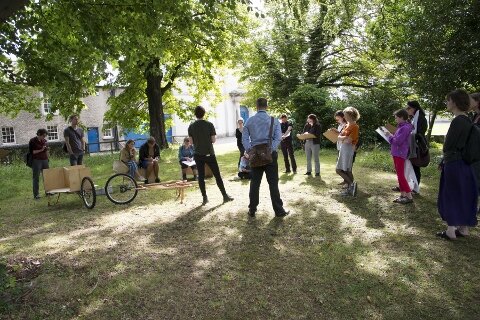
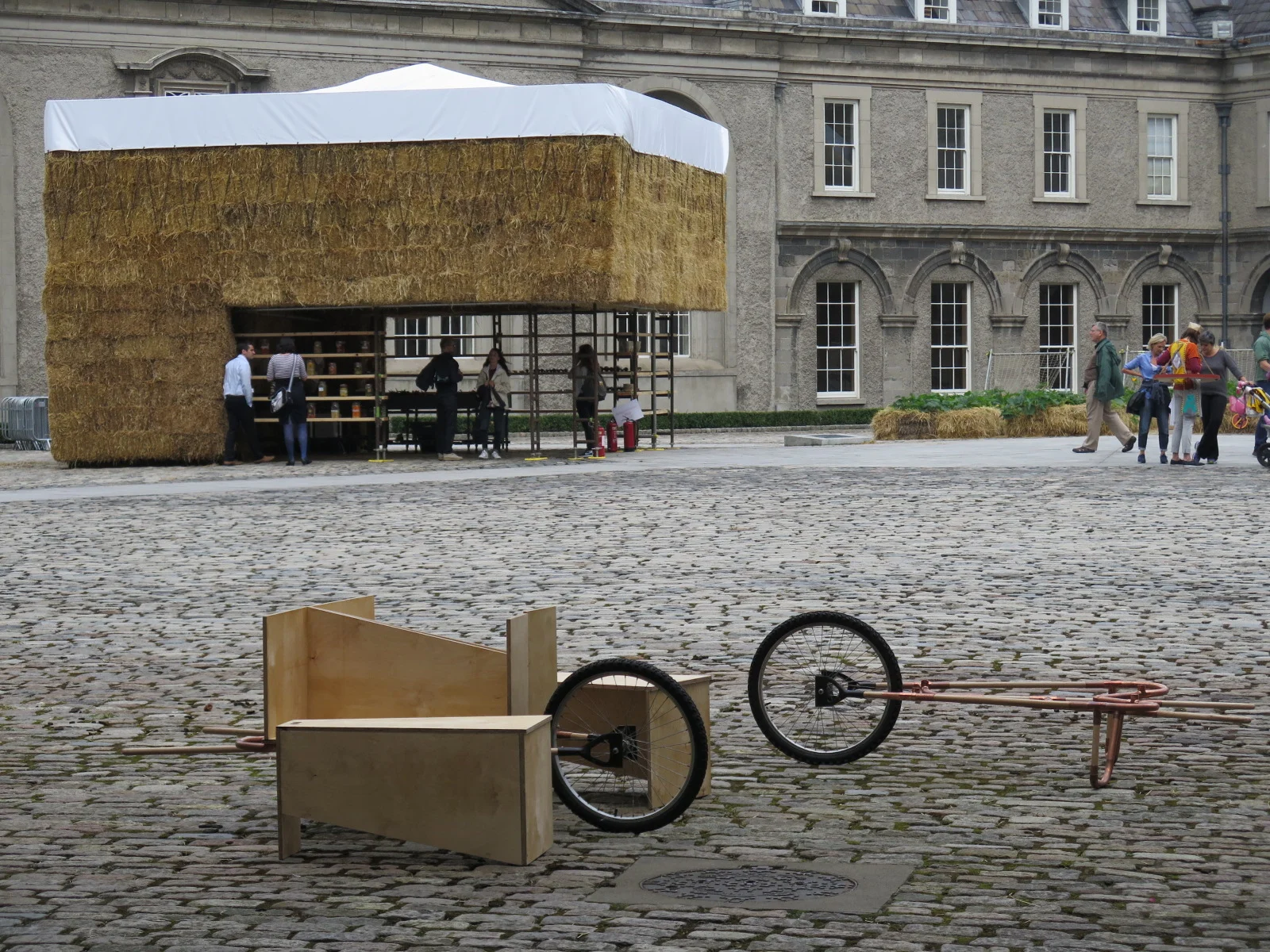
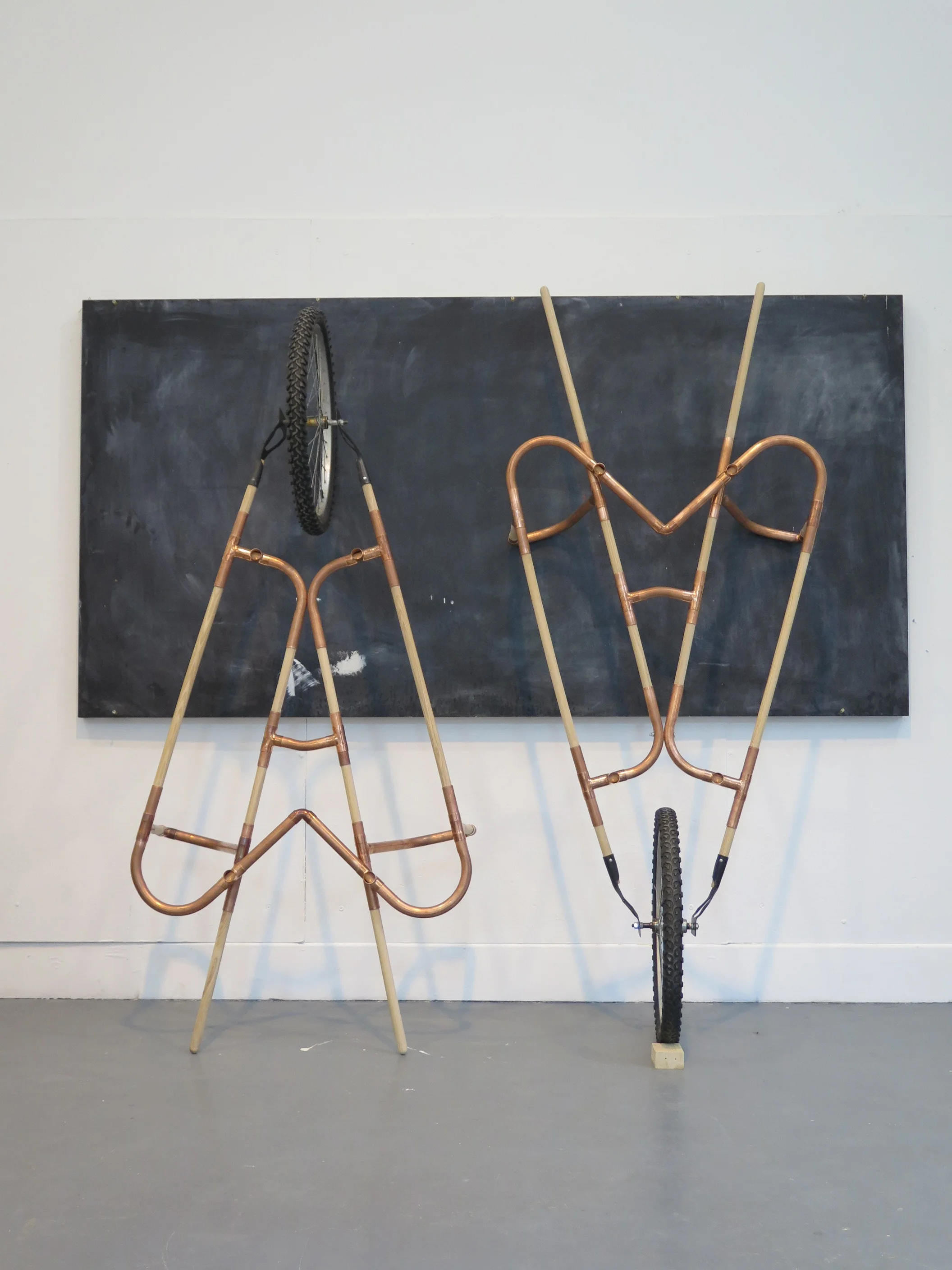
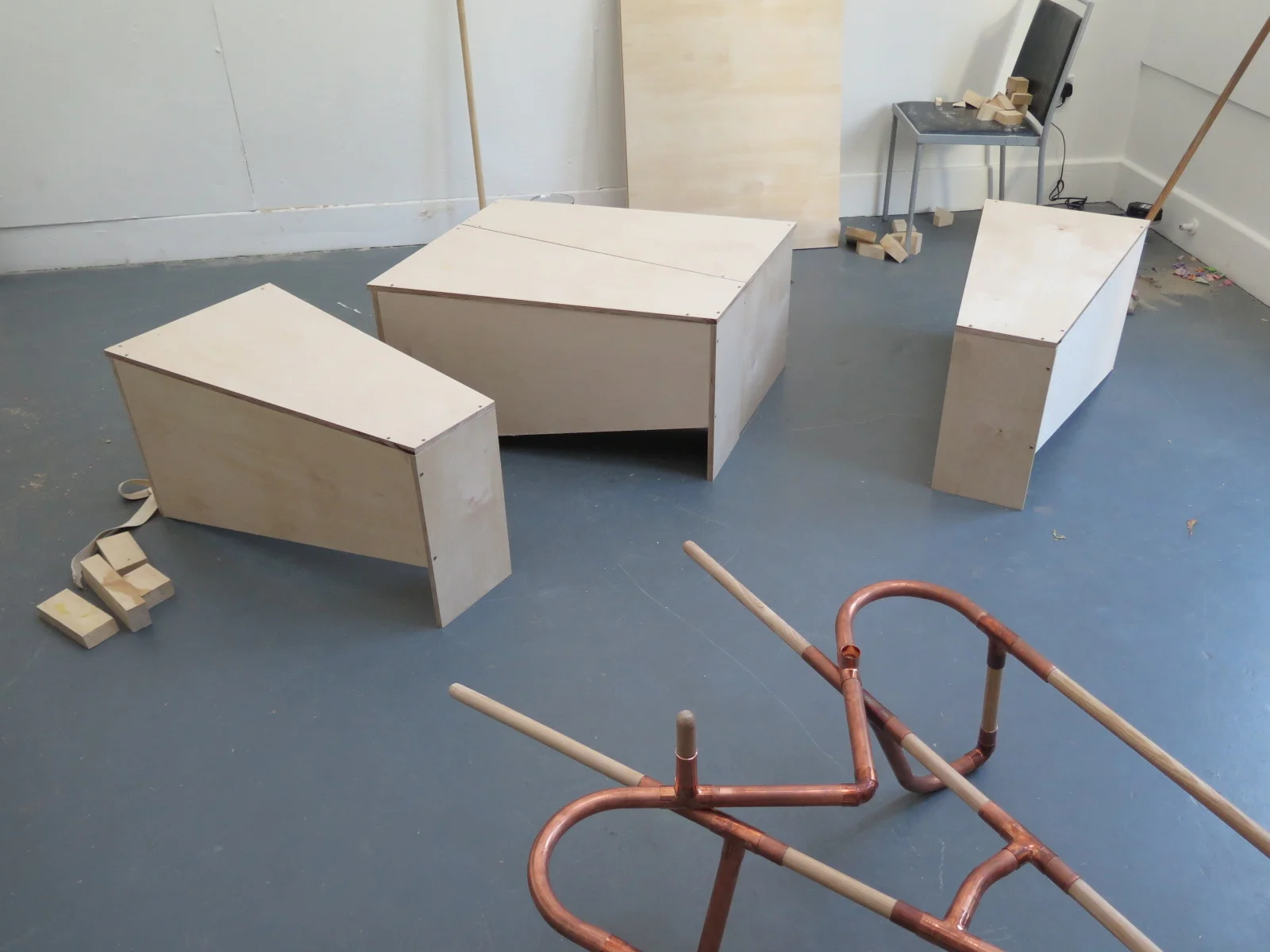
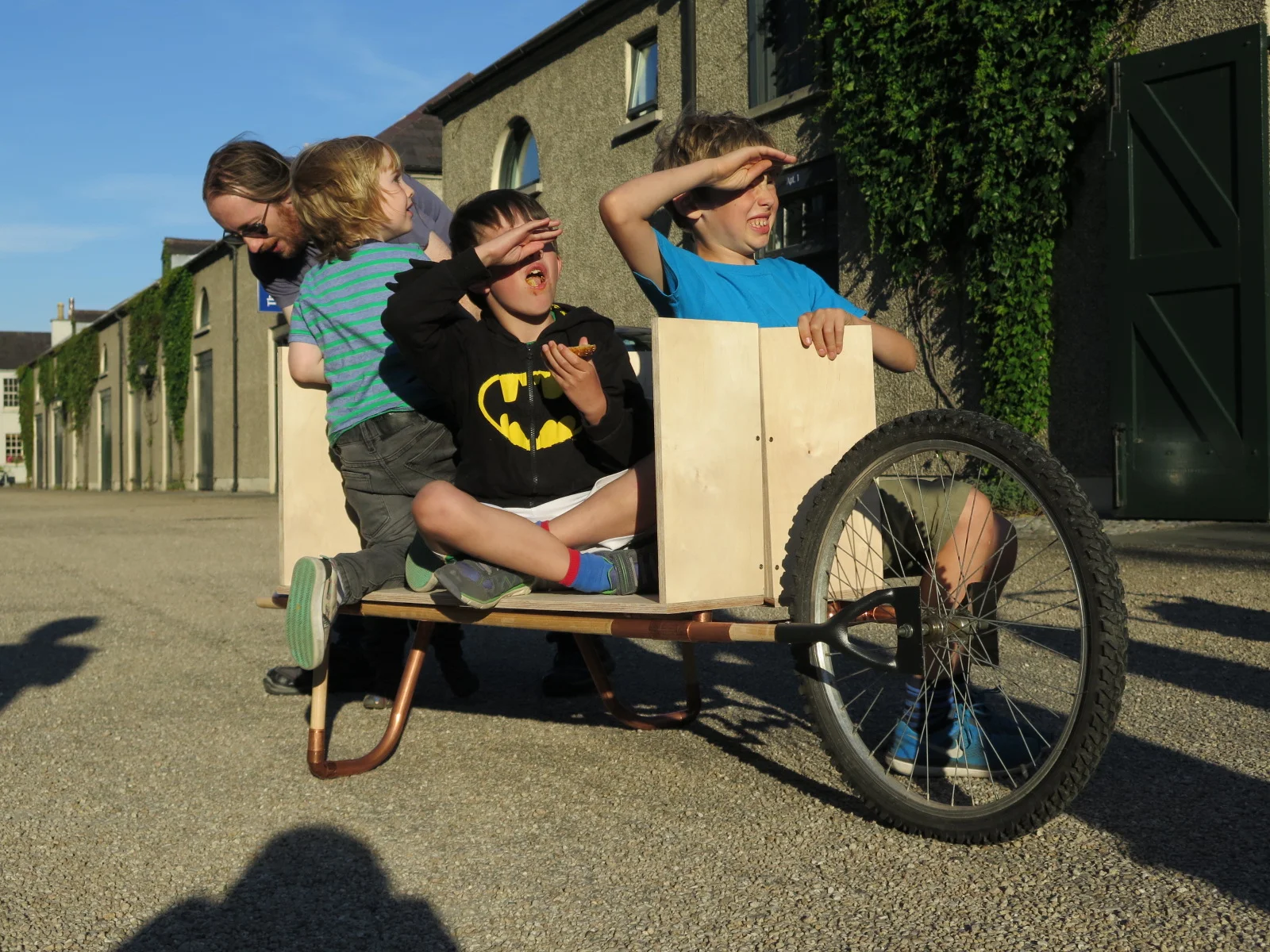
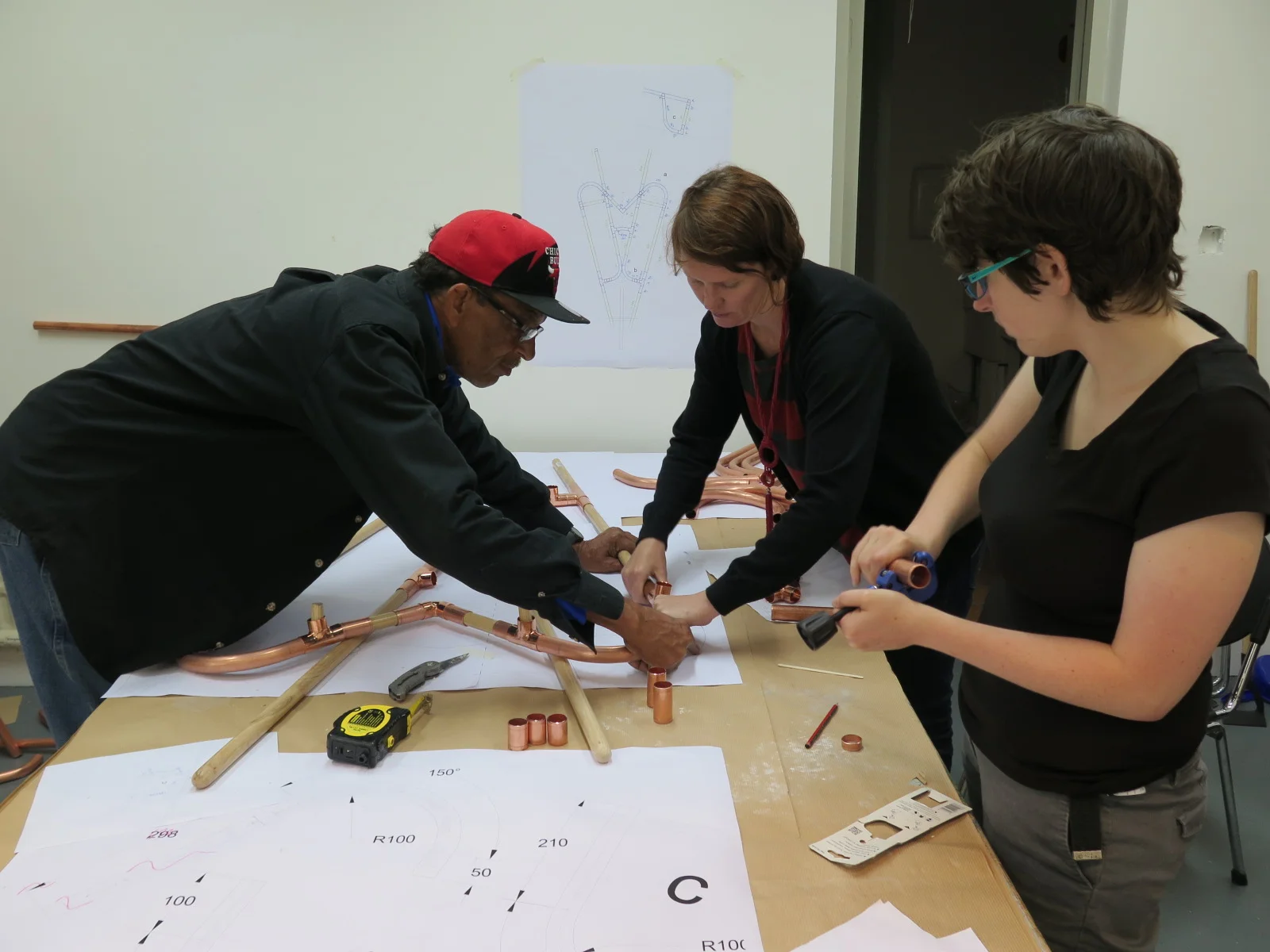
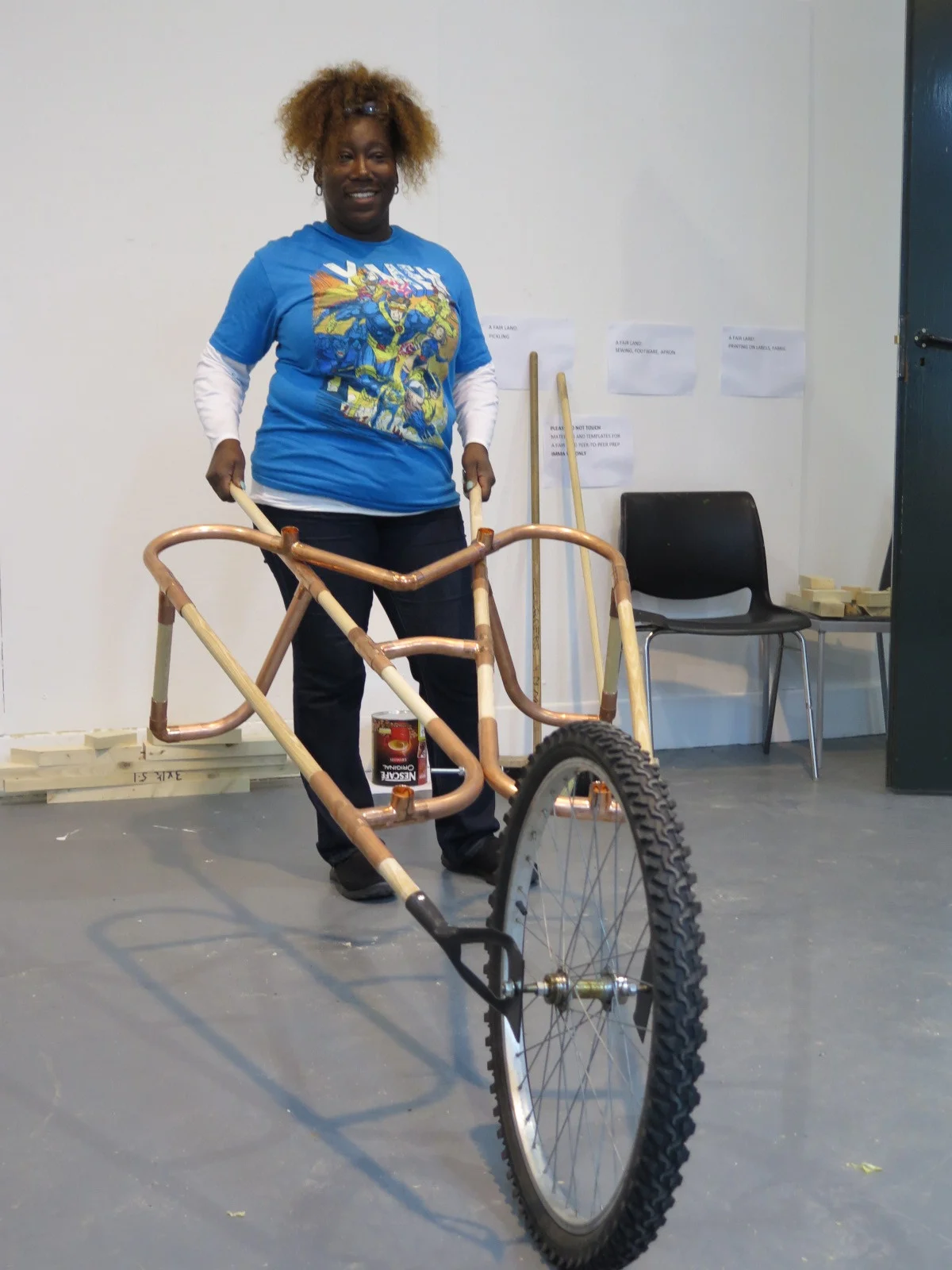
This project emerges in response to an artist residency in Grizedale supported by The Irish Museum of Modern Art in 2016 working towards the A FAIR LAND Project Revolving School is an an outdoor classroom or pedagogical infrastructure. A wheel barrow school, a space of common-ing , an outdoor making, workshop and learning space. A place for collaboration and possible dissent. The wheelbarrow is a tool that is both a symbol of work and is used for labouring. The infrastructure as well as being a tool used to work the land here becomes a tool for ‘schooling’ or ‘organising’. The infrastructure becomes a place of commoning and a place for imagining what that might be in relation to land usage.
The essential elements in the design and project are that they are mobile and can be used by everyone. They will create various anomalies of usage encouraging play, ownership and collectivism.
‘The commons’ is about stewardship of things that we own in common as human beings. It’s about ensuring that we protect them and pass them on undiminished to future generations.’ Bollier
LAND
The wheelbarrow is a tool largely used in farming, gardening and land practices. This project talks directly to the Irish relationship with land that even today is contested with the current homeless crisis and rent crisis. Who owns land? Who has access to what land? It also talks to the concerns in my art practice around food, sustainability and land use. We do not just labour, we converse, share ideas and learn to act and reclaim power.
LABOUR
The Revolving School we learn by doing. We reconnect with the land whether this be by growing our own food, by planting trees or walking. We research and discover current and historical land struggles. We situate ourselves in the now and figure out how we can act and respond.
The infrastructure becomes an important metaphor in the project where the users carry the materials in the structure. Connecting this to the outdoor activities of ‘A Fair Land’ through a playful set of educational workshop responses with children and youth using the infrastructure to mobilise, organise and move out exploring the grounds of IMMA. These materials can vary from carrying soil to art and craft making materials.
MOBILITY
The Revolving school becomes about movement. Moving from the gallery to the land and back to the gallery. Moving outside, working outdoors taking inspiration from pedagogical movements that talk about the benefits of outdoors work- connecting with people and place that surround you.
Metaphorically it is about the institution/ museum 'Revolving'. This movement spirals outside from The Museum of Modern Art to the local area- who are IMMA’s neighbouring communities? How does IMMA engage with them? Do we take art/material to them? How to we make art relevant and responsive to contemporary struggles.
REVOLUTION and 1916
Revolution:
The project emerges from research into radical and critical pedagogies in Irish Education
-Hedge schools
-Countess Markievicz 1916 : Scouting schools to produce an Irish Nationalism/ Revolution
The Countess Markievicz School http://www.countessmarkieviczschool.ie/
-The University of Revolution (Frongoch Prison Camp)
-The Murder Machine : P.H. Pearse http://www.cym.ie/documents/themurdermachine.pdf
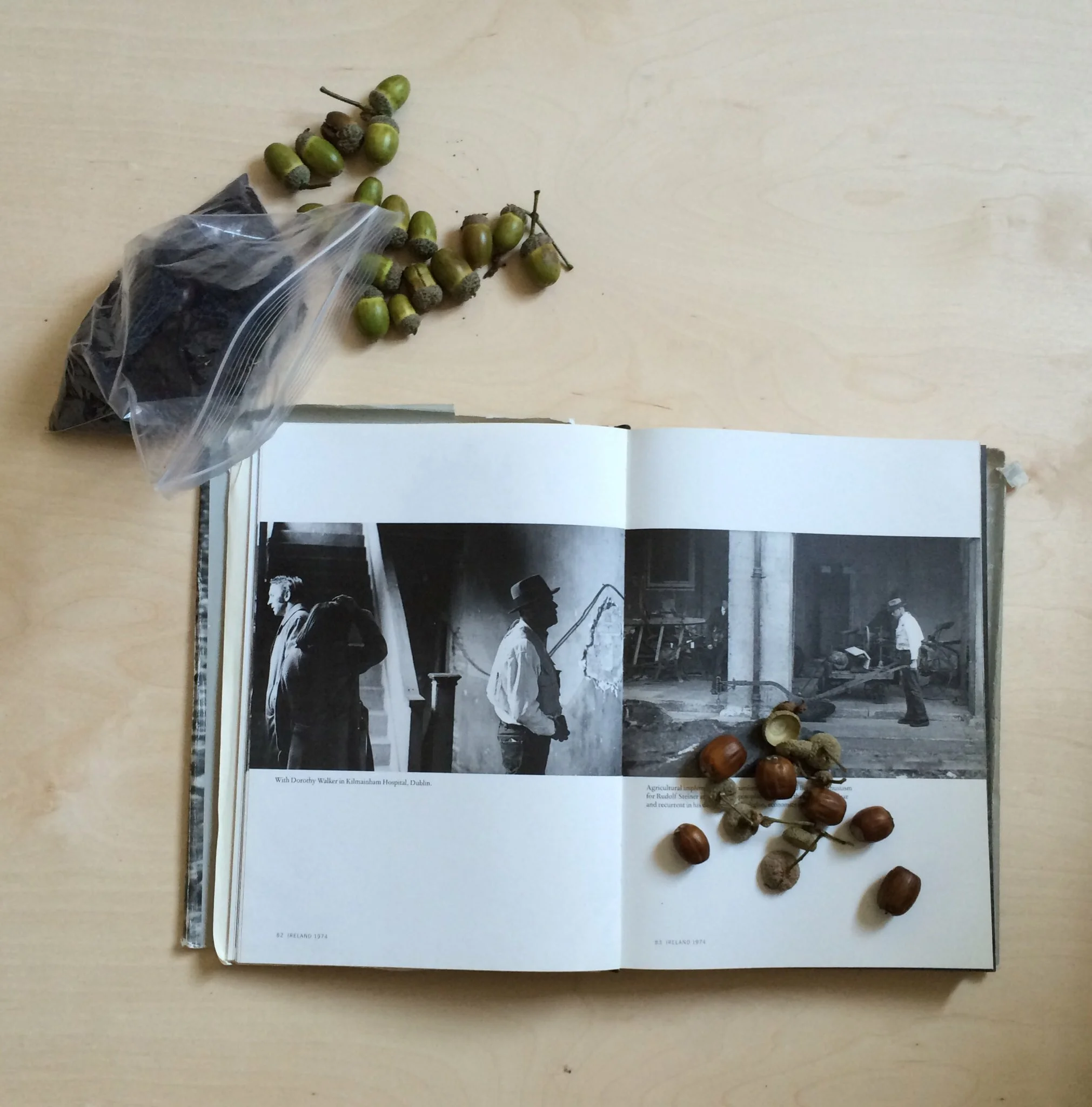
- IMMA as a proposed site of the FREE INTERNATIONAL UNIVERSITY. Joseph Beuys
Curriculum
The curriculum is created in response to the happenings and work going on at the time of its situated-ness. What are the grounds and place like where is is currently located? Can we reveal new knowledge or lost knowledge? What is the knowledge held by the participants? What are the contemporary and historical land struggles of this region? We devise the curriculum together.
Revolving School is a project by Seoidín O'Sullivan
The infrastructure, drawings and models have been designed by architect Karol O'Mahony.